
Green Artist
Artist Born for the Green Movement.
It all started on a landfill in Tampa.

Could you be the one to Help tell the story of Hongkongwillie? After you Google the life and times of Hongkongwillie,and you feel this life and story has social impact. Help spread and make it go viral. The story is important,not the person. Thanks joe.
Green Movement. Art site click link
16For God so loved the world, that he gave his only begotten Son, that whosoever believeth in him should not perish, but have everlasting life.
Hongkongwillie (joe brown) living on a landfill,(county dump) on gunn hwy Tampa Florida.
Hong Kong Willie Reuse Artist. Artist of the 60’s in the now. Acclaimed Famous Florida folk artist, Living the Life of using objects for many uses. Follow the travels of life.
Artist Born for this time, Lived on a landfill as a child. Reuse Became the way of life. To read the story from the inception of the Name Hong Kong Willie. Famed, by the humble statements from the Key West Citizen, viable art from reuse has found its time. To Live a life in the art world and be so blessed to make a social impact. Artists are to give back, talent is to tell a story, to make change. Reuse is a life experience.
 Hong Kong Willie. The name of the artist. In 1958 his mother took Hong Kong Willie to an art class. The name started then. An art teacher when doing crafts out of Gerber baby bottles, made a statement, in Hong Kong reuse was common. At that time he thought this was very interesting. His father had low-land, at that time landfills were common also. The county had told Hong Kong Willie’s father, it was safe, but as we now know this was not so. Something can come from bad to be good. Hong Kong Willie the name came from that art teacher impressing on that young mind that objects made for one use could be for many other uses. Hong Kong for the neat concept. Willie for an American name. So for many years Hong Kong Willie had a life of reuse. Hong Kong Willie saw forms in a different light, His life now was meaningful, knowing this was and would be his life. Art made from found objects, making less of a footprint on this world. Art and art teachers, HOW IMPORTANT. For the ones that have, and the ones who have not. Media can be found. Now 50 years later, we know now being green is important. We need to look at this very carefully. Our children and our world need a different understanding. Objects can be used in many different ways. Hong Kong Willie the tons of objects in his life that have been used, without much change, So for that art teacher what she did for my life. Thank You. I still have the Gerber baby bottle till this day. Hong Kong Willie.
This is a excerpt from a study of the landfill," dump" that Hongkongwillie live on.. Follow this link
Gunn Highway Landfill
The Gunn Highway Landfill is located off Gunn Highway in Tampa, Hillsborough County, Florida. The county operated the landfill as a trench-type facility for the disposal of MSW from 1958 to 1962. The landfill disposal areas occupied approximately fifteen acres. After the landfill was closed, the property was subdivided and developed. A total of thirteen apartment buildings and a clubhouse were constructed over the waste-filled areas of the landfill. According to an investigation report by a consulting firm, see Geraghty & Miller (1996), the foundations for these structures were built as follows:
The complex is founded on timber piles and post-tensioned concrete structural slab systems due to the subsurface conditions. The construction drawings approved by Hillsborough County for the apartment complex indicate that a synthetic membrane was to be installed beneath the slabs to block and disperse the migration of methane gas, generated by the decomposition of solid waste.
Even though efforts were made during construction to prevent methane gas generated by the waste from seeping into the structures, problems were discovered in the late 1980's. In addition, differential settlement of the waste has resulted in cracks in the overlying structures in spite of the attempt to establish an adequate pile foundation system for those structures.
Numerous investigations have been conducted at the property evaluating whether methane gas has migrated into the on-site structures and evaluating the potential for the gas to migrate off-site through utility trenches containing electrical conduits, sanitary sewers and stormwater pipes. Some gas monitoring data report methane gas concentrations in the soils at levels significantly higher than 100 percent of the lower explosive limit (LEL) for methane. Methane gas has consistently been detected under the slabs at the clubhouse and at many of the apartment buildings. Fortunately, methane gas has not been detected in the first floor apartments. Additional ventilation has been added to on-site structures and concrete floors have been resealed to try and minimize the risks from methane gas accumulation. While investigators now believe that the levels of methane gas are decreasing at the site, indicating that the Gunn Highway Landfill may have passed its peak methane generation rate, gas monitoring is still continuing and is likely to be required for many more years.

www.codegreencommunity.org/photo/albums/famous-tampa-gree...
www.google.co.uk/#hl=en&cp=31&gs_id=3t&xhr=t&...
www.facebook.com/pages/Tampa-Green-Art-Galleries/10950485...
www.hongkongwillie.org/?p=19655
www.google.ca/#hl=en&cp=31&gs_id=3g&xhr=t&...
hk.search.yahoo.com/search;_ylt=Axt7wJTctIlOQxsA_Veyygt.;...
www.etsy.com/shop/hongkongwillie
www.youtube.com/watch?v=tbpC9S-gIOo
www.youtube.com/watch?v=KrV3Aj85I84
hongkongwillie.blogspot.com/2011/04/tampa-art-galleriesfa...
hongkongwillie.blogspot.com/2011/04/green-reuse-artist-bo...
hongkongwillie.blogspot.com/2011/05/tampa-famous-green-ar...
hong-kong-willie-blog.blogspot.com/2008/07/hong-kong-will...
Artist Born for the Green Movement.
It all started on a landfill in Tampa.
GOOGLE HONG KONG WILLIE

Could you be the one to Help tell the story of Hongkongwillie? After you Google the life and times of Hongkongwillie,and you feel this life and story has social impact. Help spread and make it go viral. The story is important,not the person. Thanks joe.
Green Movement. Art site click link
John 3:16
King James Version (KJV)
16For God so loved the world, that he gave his only begotten Son, that whosoever believeth in him should not perish, but have everlasting life.
MY FOX TAMPA BAY
Hongkongwillie (joe brown) living on a landfill,(county dump) on gunn hwy Tampa Florida.
Hong Kong Willie Reuse Artist. Artist of the 60’s in the now. Acclaimed Famous Florida folk artist, Living the Life of using objects for many uses. Follow the travels of life.
University of South Florida
A "documentary film"
Artist Born for this time, Lived on a landfill as a child. Reuse Became the way of life. To read the story from the inception of the Name Hong Kong Willie. Famed, by the humble statements from the Key West Citizen, viable art from reuse has found its time. To Live a life in the art world and be so blessed to make a social impact. Artists are to give back, talent is to tell a story, to make change. Reuse is a life experience.

This is a excerpt from a study of the landfill," dump" that Hongkongwillie live on.. Follow this link
Gunn Highway Landfill
The Gunn Highway Landfill is located off Gunn Highway in Tampa, Hillsborough County, Florida. The county operated the landfill as a trench-type facility for the disposal of MSW from 1958 to 1962. The landfill disposal areas occupied approximately fifteen acres. After the landfill was closed, the property was subdivided and developed. A total of thirteen apartment buildings and a clubhouse were constructed over the waste-filled areas of the landfill. According to an investigation report by a consulting firm, see Geraghty & Miller (1996), the foundations for these structures were built as follows:
The complex is founded on timber piles and post-tensioned concrete structural slab systems due to the subsurface conditions. The construction drawings approved by Hillsborough County for the apartment complex indicate that a synthetic membrane was to be installed beneath the slabs to block and disperse the migration of methane gas, generated by the decomposition of solid waste.
Even though efforts were made during construction to prevent methane gas generated by the waste from seeping into the structures, problems were discovered in the late 1980's. In addition, differential settlement of the waste has resulted in cracks in the overlying structures in spite of the attempt to establish an adequate pile foundation system for those structures.
Numerous investigations have been conducted at the property evaluating whether methane gas has migrated into the on-site structures and evaluating the potential for the gas to migrate off-site through utility trenches containing electrical conduits, sanitary sewers and stormwater pipes. Some gas monitoring data report methane gas concentrations in the soils at levels significantly higher than 100 percent of the lower explosive limit (LEL) for methane. Methane gas has consistently been detected under the slabs at the clubhouse and at many of the apartment buildings. Fortunately, methane gas has not been detected in the first floor apartments. Additional ventilation has been added to on-site structures and concrete floors have been resealed to try and minimize the risks from methane gas accumulation. While investigators now believe that the levels of methane gas are decreasing at the site, indicating that the Gunn Highway Landfill may have passed its peak methane generation rate, gas monitoring is still continuing and is likely to be required for many more years.
Charlie's World Fox News
Tampa gallery practices the art of creative reuse
 By Kerry Schofield
The year was 1958. Joe Brown, 8, lived next to a county dump site in Tampa, Fla. Brown found old junk, fixed it up and sold it. Brown knew he had a higher calling in life — he was destined to be an artist.
The year was 1958. Joe Brown, 8, lived next to a county dump site in Tampa, Fla. Brown found old junk, fixed it up and sold it. Brown knew he had a higher calling in life — he was destined to be an artist.
Brown, who is now 60, makes art from trash at his Hong Kong Willie Tampa Art Gallery. He has embellished the outside of the gallery with splashes of Caribbean-color paint and found objects reminiscent of Key West.
Brown
is as colorful as the gallery — he wears a bright tropical shirt with
red, white and blue plaid shorts. Patrons tell him they can smell the
salt water when they drive up. The gallery, however, is perched inland
near Morris Bridge Road and Interstate 75 where a rusty-hair hen named
Fred, first thought to be a rooster, patrols the property. Fred,
abandoned five years ago by tourists, trots between the gallery and
adjacent hotel leaving a trail of droppings behind her.
Brown
lived on the Gunn Highway Landfill in Tampa from 1958 to 1963. The Hillsborough
County landfill operated for four years and was closed in 1962. “It was
astounding how quick they could fill the 15 acres in pits that were
enormous,” Brown said.
An
apartment complex now sits on top of the old landfill. A report by the
Florida Department of Environmental Protection indicated that a lining
was placed underneath the complex when it was built to block methane gas from leaking. The gas is a byproduct of rotting garbage.
As a child, Brown
lived on his father’s dairy and beef farm. Brown said during heavy
rain, the low land on the farm flooded the neighboring Gunn Highway. In
1957, Hillsborough County officials offered to elevate the low land to
stop the flooding by turning it into a landfill. When the property was
sold in 1984 by Brown’s father, soil testing revealed heaps of old paper
and punctured cans of spray paint.
“They
dug up and took out newspapers like the day they were put in,” Brown
said. “It reminded me of nuclear bombs that were going to go off. They
dumped everything in the landfill.”
As
a child, Brown foraged at nearby dumpsters. County workers saved junk
for him that people dropped off. One day, Brown’s parents got a call
from his elementary school teacher and told them that Brown had $100 in
his pocket and that he must be stealing.
Brown
picked up the saved junk after school and turned it into something new.
Contrary to his elementary school teacher’s accusation, he wasn’t a
thief after all. Instead he was a young entrepreneur who sold other
people’s trash.
“There was so much excess coming into the landfill,” Brown said. “There was so much waste from our society.”
However,
Brown’s mother wanted him to pursue his talents and dreams, not money.
But he developed a business sense during his young junk collecting days
and told his mother, “I’m not going to be an artist. I’ve read that
artists starve to death.”
Brown’s
mother became concerned. He said his mother knew “the value of
happiness and the travels of life” and sent him to a summer art class.
The
art teacher inspired awe in Brown. She taught him how to reuse baby
food jars by melting the glass and adding marbles to the mix to create
paper weights. The teacher had traveled to Hong Kong, China and
Hiroshima, Japan after World War II. She saw how people were forced to
recycle and reuse items out of necessity after the war. This left an
impression on Brown.
It
was at this time that he personified the name Hong Kong Willie, which
harkens back to China where the mass production of merchandise occurs.
The “Willies” are people like Brown and other environmentalists who try
to reuse trash instead of throwing it into landfills.
After
high school, Brown went to college to study business but dropped out
after three years. He worked in the material handling industry until
1981. Although Brown had achieved a successful career and lifestyle, he
had become discouraged in 1979.
“The change came from knowing that I had come to the point of what people call success,” Brown said. “I wasn’t happy inside.”
He
had been diagnosed with depression in 1973, a condition that was caused
from high fructose intake and that lasted for more than four years.
In
1985, Brown and his artist wife, Kim, bought the half-acre property off
Fletcher Avenue and Morris Bridge Road. For two decades the two small
wooden shacks, built around 1965, that now house the gallery operated as
a bait and tackle shop.
Nowadays,
Brown raises and sells worms by the pound mainly for composting. He
recycled 250 thousand pounds in the worm bed in 2009. Brown still sells
the worms for $3.50 a cup for fishing.
In
1981, Brown resurrected the Hong Kong Willie name from his childhood
art class. In the early 1980s, both he and his wife, Kim, began
upcycling trash into art. Brown entered another world when he left his
mainstream lifestyle behind — he joined the art scene and booked rock
bands at the same time.
The
Brown family spent half their time in Tampa and the other half in a
small home on Boot Key Harbor in Marathon. Brown gained the reputation
of the Key West lobster buoy artist.
“I had a total different appearance when in Key West,” Brown said. “I used to have hair down to my waist.”
When Brown came back to Tampa, he lived in the woods for months at a time, much like Henry David Thoreau in “Walden,” who had lived a simple lifestyle in a one room cabin near Walden Pond in Concord, Mass.
Back
in Key West, Brown became friends with local fishermen. He and others
organized efforts to clean up plastic foam buoys that had collected in
the waterways from years of fishing.
“You would go and find buoys floating in the mangroves, up on the shore and they had trashed up everything,” Brown said.
The
Earth Resource Foundation reports that plastic foam is dumped into the
environment. It breaks up into pieces and chokes animals by clogging
their digestive system.
Brown
sells the buoys from the Hong Kong Willie Art Gallery for $2.00 a
piece. He said he has sold from 30 to 40 thousand buoys in the last ten
years. Some of the buoys are more than 50 years old and are collected by
tourists from China and Japan.
“If
you go to the Keys right now and you see a buoy floating, you’ll see
someone slam on the brakes to get it,” Brown said. “They’re the most
prized buoys of the world.”
Brown
made a holiday buoy tree 12 years ago from the Key West buoys. Hundreds
of buoys are strung on rope and wrapped around a utility pole next to
the gallery. Brown hopes the novelty of the buoy tree will inspire and
stimulate children to find new ways to reduce, reuse and recycle
garbage.
In
Kate Shoup’s “Rubbish! Reuse Your Refuse,” the author said much of what
we get is designed to be scrapped after only a few uses. We easily
throw away pens, lighters, razors and dozens of other items. Shoup said
Americans consume 2 million plastic drink bottles every 5 minutes.
Likewise,
Brown finds uses for items that would otherwise end up in a landfill.
He buys used burlap bags from coffee and peanut producers. He sells them
to the U.S. National Forestry Service for the collection of pine seeds
and Samuel Adams for hops production.
Brown and his wife, Kim, also make art hippie bags from the burlap sacks and sell them in the gallery. Kim,
also an artist, paints fish, turtles, crows, parrots and the like on
driftwood and on wood that Brown has salvaged from saw mills and from
old buildings in Key West.
Brown
said art is viewed and appreciated by certain people. “If it all came
out the same, it would be like bland grits all the time,” Brown said. He
likes to refer to the gallery art as reused rather than recycled, which
takes waste and turns it into an inferior product. Reuse on the other
hand involves remaking an item and using it again for the same intended
purpose.
“I
also try to stay away from imprinting a definite use for a definite
item,” Brown said. He explains that 2-liter bottles are not limited to
making bird feeders. The bottles can be used for art and craft projects
as well.
Brown said the larger message he wants to communicate is that the disposal of garbage today is creating a toxic environment.
“I still have the original Gerber baby food bottle that I melted” Brown said. “It’s sitting on my mom’s little table.”


View photographs of the Hong Kong Willie art gallery
http://kerryschofieldjournal.blogspot.com/2010/09/hong-kong-willie-photomontage.html
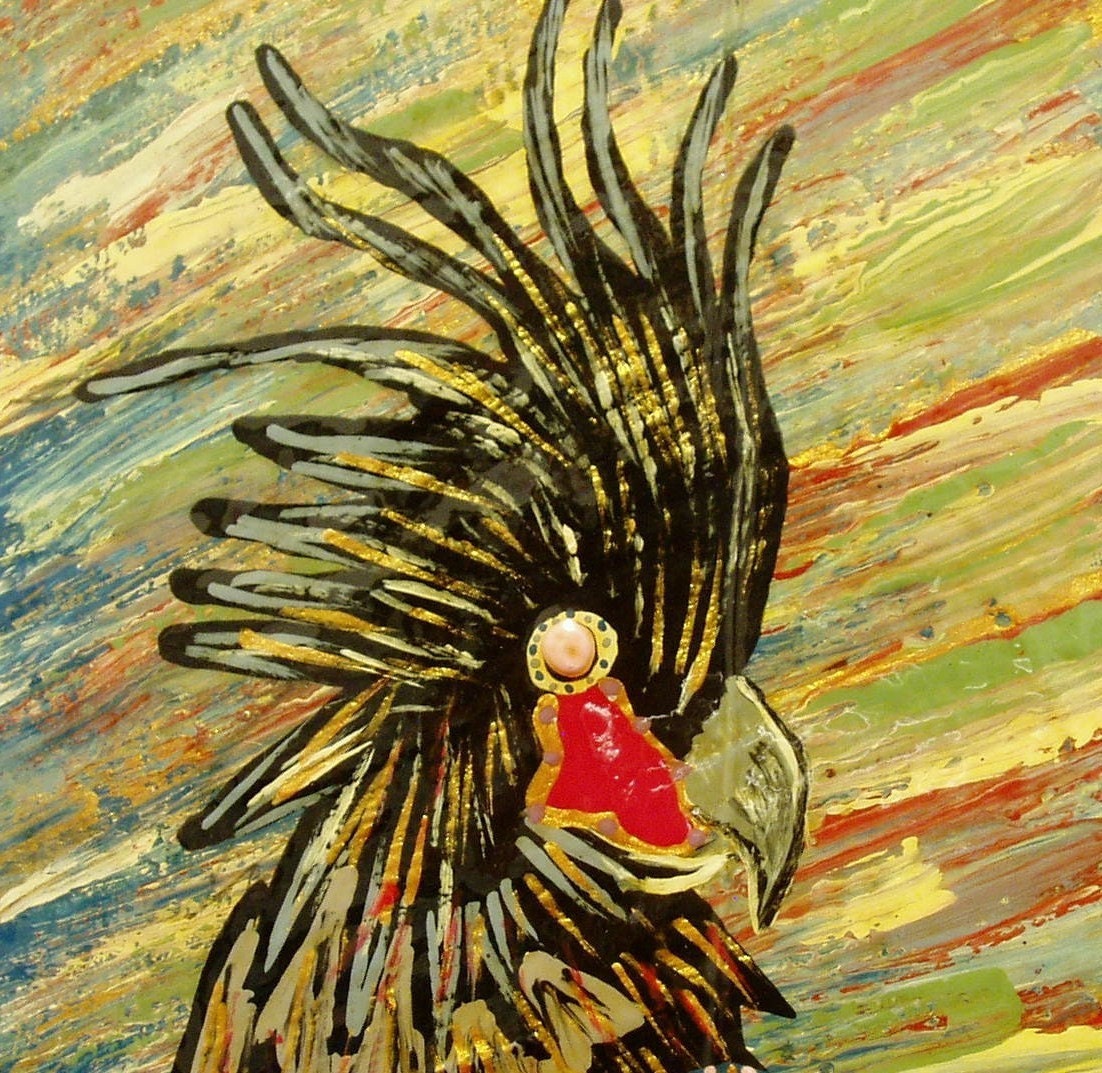

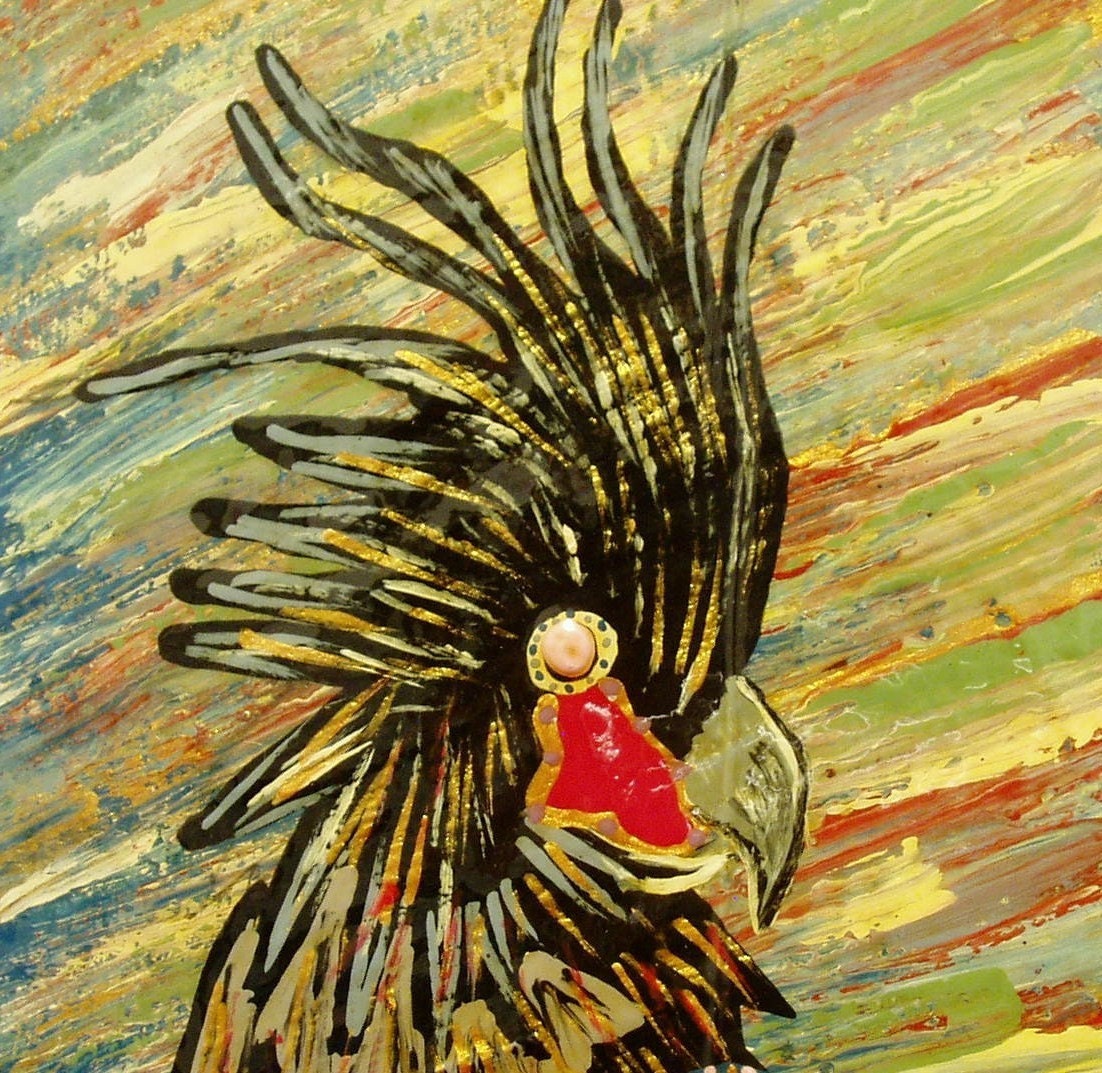
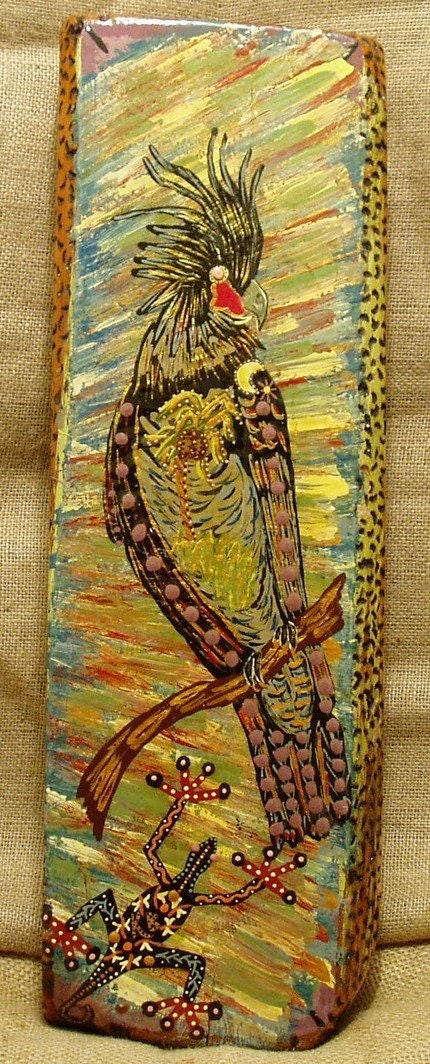
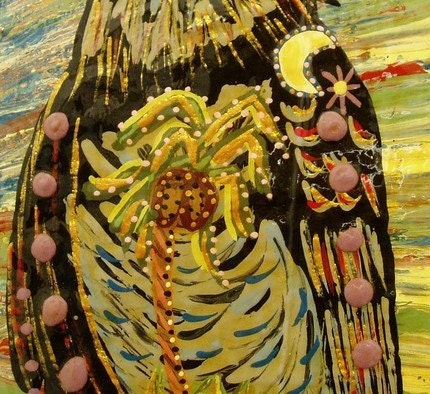
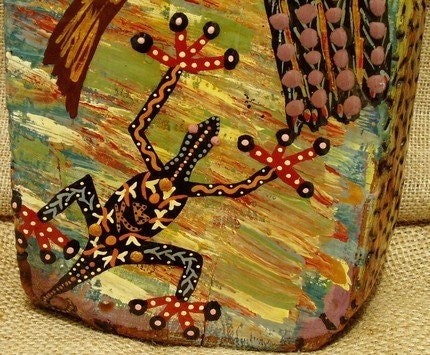
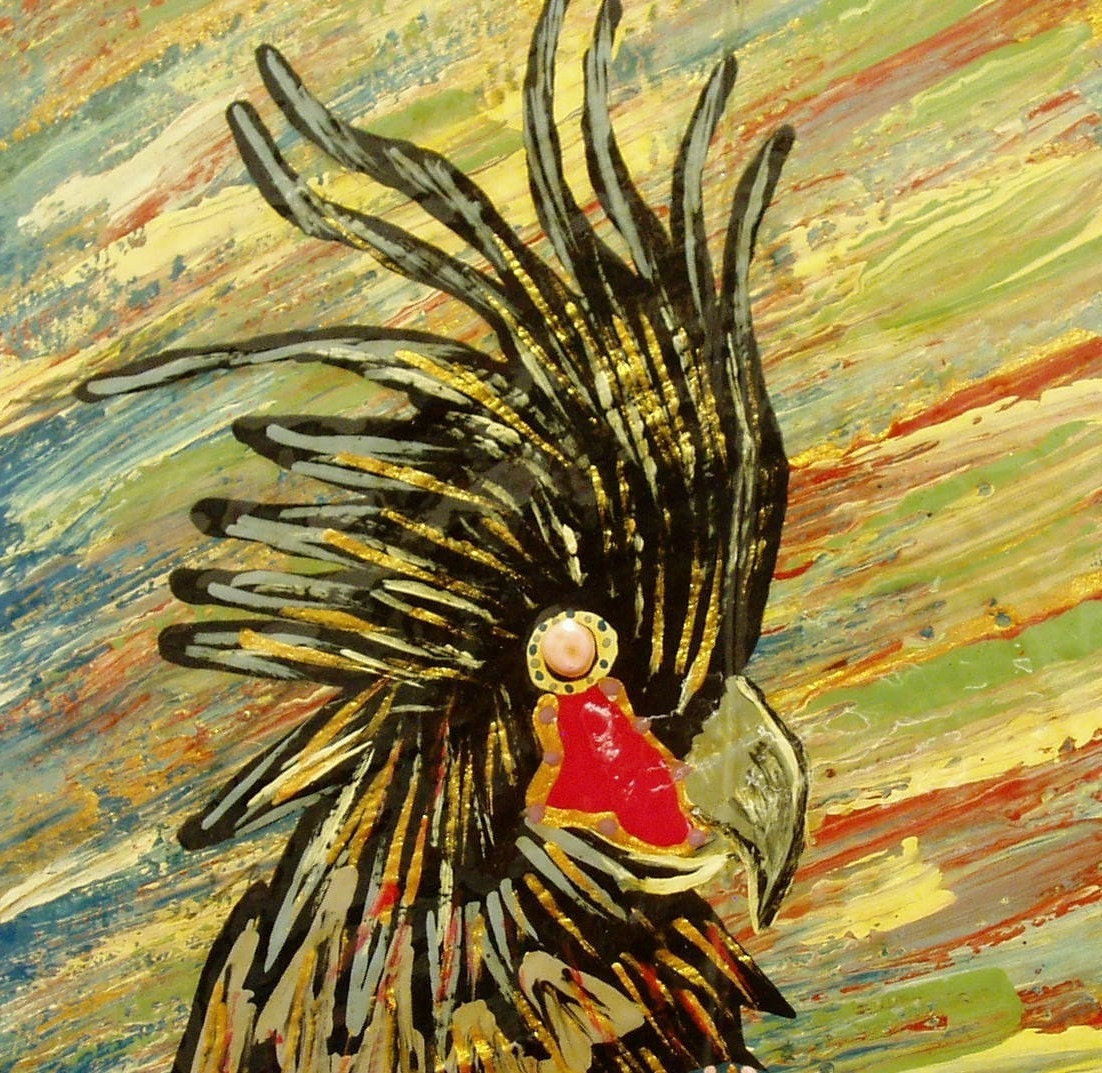
 "Black Bird of Key Largo"
The allurement of the winds blowing in the palm trees and the moon shining through and the "Black Bird of Key Largo" looking upon.
Hong Kong Willie
**HONG KONG WILLIE artist Kim Brown, chose aged Florida sawmill stock as canvas. Recovered Brass Hanger: Key West lobster trap rigging. Originally connects and suspends rigging of spiny lobster traps in Key West waters. Candy-like appearance due to multiple protective layers. Assigned number in artist register by Fisherman ID tag, corresponding burn-etched # rear of piece. Key recovered by Robert Jordan, acclaimed treasure hunter: also in identification of piece and artist.
Dimensions:
24" L
8" W
4" H
Weight: 17+ LB
Hong Kong Willie photomontage
I'm
working on a feature story about Hong Kong Willie aka Joe Brown and
family who are reuse artists. I recently spent some time interviewing Joe Brown at his studio in Tampa, Fla. We had a pleasant talk about his
working gallery. We sat outside and there was a nice breeze, although it
was a warm sunny day still here in Florida. Join me in the midst of
writing the story. I took a few pictures to share with you. Enjoy.

Hong Kong Willie family art gallery.
Reuse artists from the 1960s.
Morris Bridge Road and Interstate 75, Tampa, Fla.
The garden shrubbery consists of recycled glass bottles and aloe vera plants.

Hundreds of lobster buoys from Key West, Fla., strung on rope,
wrapped and tied to a utility pole.
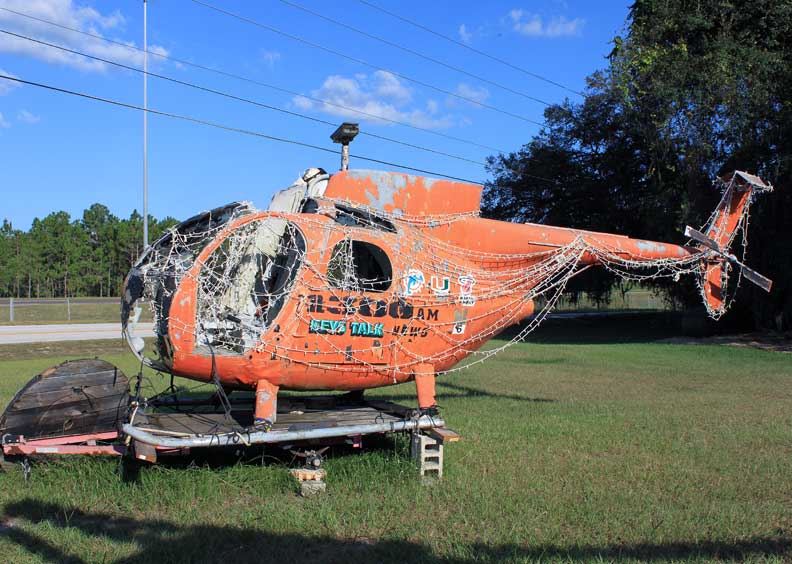
Hong Kong Willie orange helicopter that once served in
Vietnam and later used by a radio station.

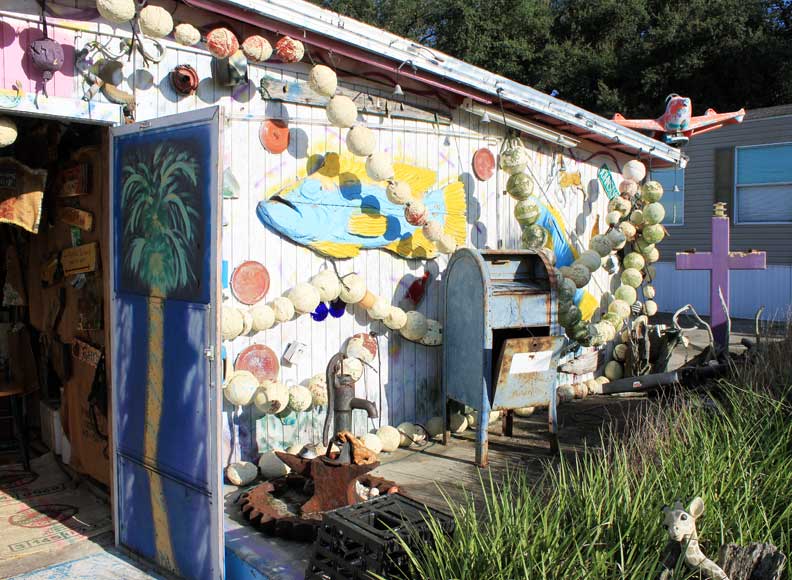
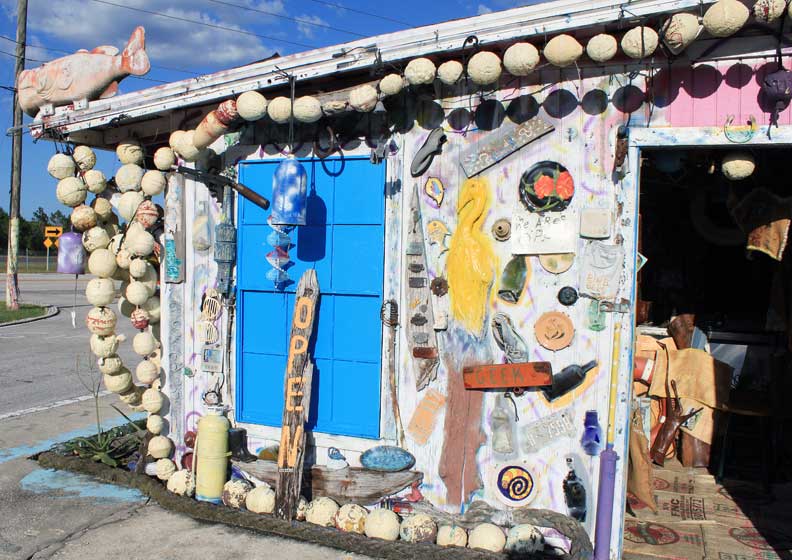
Key West lobster buoys hang from the small 1950s wood frame building.
Tourists buy the buoys for souvenirs. Some of the buoys are 50 years old.

The exterior of the roadside building is an artful blend of
Caribbean-color paint and found objects.

Seabird plaques, sea glass, melted bottles, painted driftwood
and rusty objects are a few of the items that decorate the wood panels.
Entrance into the small building, which is lined from ceiling to floor
with burlap sacks from South American coffee roasters.
Joe Brown and family also composts and sells worms.
Patrons buy worms for fishing and composting.
They also buy South American burlap coffee bean sacks.

Hong Kong Willie reuse artists ,reuse the burlap
and make hippie beach bags.

Hong Kong Willie reuse artists use old clothes, buttons, baseball leather and
yarns to sew and decorate the burlap bags.
View photographs of the Hong Kong Willie art gallery
http://kerryschofieldjournal.blogspot.com/2010/09/hong-kong-willie-photomontage.html
Famous Tampa Artist
Black Bird of Key Largo
$98,000 To buy click this link
The allurement of the winds blowing in the palm trees and the moon shining through and the "Black Bird of Key Largo" looking upon.
Hong Kong Willie
**HONG KONG WILLIE artist Kim Brown, chose aged Florida sawmill stock as canvas. Recovered Brass Hanger: Key West lobster trap rigging. Originally connects and suspends rigging of spiny lobster traps in Key West waters. Candy-like appearance due to multiple protective layers. Assigned number in artist register by Fisherman ID tag, corresponding burn-etched # rear of piece. Key recovered by Robert Jordan, acclaimed treasure hunter: also in identification of piece and artist.
Dimensions:
24" L
8" W
4" H
Weight: 17+ LB

New Tampa Patch
By Tristram DeRoma
The Story Behind the Eye-Catching Art at I-75 Exit 266 Tampa Florida
Folk artist Joe Brown, better known as "Hong Kong Willie," makes art with a message at his home/studio near I-75 Exit 266 Tampa Florida.
Sometimes, it’s the smallest experiences that have the biggest impact on a person’s life.
While attending an art class in 1958 at the age of 8, Tampa folk artist Joe Brown recalled being mesmerized by the lesson. It involved transforming a Gerber baby bottle into a piece of art.
“The Gerber bottle had no intrinsic value at all,” he said. “But when (the instructor) got through with me that day, she made me see how something so (valueless) can be valuable.”
By the time class was over, Brown learned many other lessons, too, such as the importance of volunteerism, recycling, reuse and giving back to the community. He recalled being impressed by the teacher's volunteer work in Hiroshima, Japan, helping atomic bomb survivors.
"One of the last words she ever spoke to me about that was, ‘When I left, I left out of Hong Kong,’ ” he said. After turning that over in his young brain for awhile, he decided to use it in a nickname, adding the name “Willie” a year later.
You've probably seen Hong Kong Willie's eye-catching home/gallery/studio at Fletcher Avenue and Interstate 75. But what is the story of the man behind all those buoys and discarded objects turned into art?
Brown practiced his creative skills through his younger years. But as an adult, he managed to amass a small fortune working in the materials management industry. By the the '80s, he left the business world and decided to concentrate on his art. He spent some years in the Florida Keys honing his craft and building his reputation as a folk artist. He also bought some land in Tampa near Morris Bridge Road and Fletcher Avenue where he and his family still call home.
Brown purchased the land just after the entrances and exits to I-75 were built. He said he was once offered more than $1 million for the land by a restaurant. He turned it down, he said, preferring instead to make part of the property into a studio and gallery for the creations he and his family put together.
And all of it is made of what most people would consider “trash.” Pieces of driftwood, burlap bags, doll heads, rope — anything that comes Brown’s way becomes part of his vocabulary of expression, and, in turn, becomes something else, which makes a tour of his property somewhat of a visual adventure. What at first seems like a random menagerie of glass, driftwood and pottery suddenly comes together in one's brain to form something completely different. One moment nothing, the next a powerful statement about 9/11.
One Man's Trash ...
Trash? There is no such thing, Brown seems to say through his art.
He keeps a blog about his art at hongkongwillie.blogspot.com. He also sells his creations through the Website Etsy.com.
In his shop, he has fashioned many smaller items out of driftwood, burlap bags and other materials into signs, purses, totes, bird feeder hangars and yard sculptures.
He sells a lot to the regular influx of University of South Florida parents and students every year who are are at first intrigued by the “buoy tree” and the odd-looking building they see as they take Exit 266 off I-75.
Brown Sells More Than Art
Of course, the real locals know Brown’s place for the quality of his worms.
If there’s one thing that Brown knows does well in the ground, it’s the Florida redworm, something he enthusiastically promotes, selling the indigenous species to customers for use in their compost piles. Some of his customers say his worms are just as good at the end of a fishing hook, though.
“To be honest, what made me come here is that they had scriptures on the top of his bait cans,” said customer John Brin. “Plus, they have good service. They’re nice and they’re kind, and they treat you like family.”
Though Brin knows Brown sells them mostly for composting, he said they are great for catching blue gill, sand perch and other local favorites. He also added that he likes getting his worms from Brown “because his bait stays alive longer than any other baits I’ve used.”
For prices and amounts, he has another blog dedicated just to worms.
Of course, many people also stop by to buy the smaller pieces of art that he and his family create: purses made of burlap, welcome signs made of driftwood, planters and other items lining the walls of his store.
He’s also helped put his mark on the decor of local establishments too, such as Gaspar’s Patio, 8448 N. 56th st.
Owner Jimmy Ciaccio said that when it came time to redecorate the restaurant several years ago, there was only one person to call for the assignment, and that was his good friend Brown.
"I’ve known Joe all my life, and we always had a good chemistry together,” Ciaccio said. "He’s very creative and fun to be around, and that’s how it all came about.”
Ciaccio says he still gets compliments all the time for the restaurant’s atmosphere he created using the “trash” supplied by Brown. He describes the style as a day at the beach, like a visit to Old Key West. “They’re so inspired, they want to decorate their own homes this way,” he said.
It’s that kind of testimony that makes Brown feel good, knowing that others, too, are inspired to create instead of throw away when they see his work. He simply lets his work speak for itself.
“Somebody once told me to keep telling the story and they will keep coming," he said, "and they always do."
While attending an art class in 1958 at the age of 8, Tampa folk artist Joe Brown recalled being mesmerized by the lesson. It involved transforming a Gerber baby bottle into a piece of art.
“The Gerber bottle had no intrinsic value at all,” he said. “But when (the instructor) got through with me that day, she made me see how something so (valueless) can be valuable.”
By the time class was over, Brown learned many other lessons, too, such as the importance of volunteerism, recycling, reuse and giving back to the community. He recalled being impressed by the teacher's volunteer work in Hiroshima, Japan, helping atomic bomb survivors.
"One of the last words she ever spoke to me about that was, ‘When I left, I left out of Hong Kong,’ ” he said. After turning that over in his young brain for awhile, he decided to use it in a nickname, adding the name “Willie” a year later.
You've probably seen Hong Kong Willie's eye-catching home/gallery/studio at Fletcher Avenue and Interstate 75. But what is the story of the man behind all those buoys and discarded objects turned into art?
Brown practiced his creative skills through his younger years. But as an adult, he managed to amass a small fortune working in the materials management industry. By the the '80s, he left the business world and decided to concentrate on his art. He spent some years in the Florida Keys honing his craft and building his reputation as a folk artist. He also bought some land in Tampa near Morris Bridge Road and Fletcher Avenue where he and his family still call home.
Brown purchased the land just after the entrances and exits to I-75 were built. He said he was once offered more than $1 million for the land by a restaurant. He turned it down, he said, preferring instead to make part of the property into a studio and gallery for the creations he and his family put together.
And all of it is made of what most people would consider “trash.” Pieces of driftwood, burlap bags, doll heads, rope — anything that comes Brown’s way becomes part of his vocabulary of expression, and, in turn, becomes something else, which makes a tour of his property somewhat of a visual adventure. What at first seems like a random menagerie of glass, driftwood and pottery suddenly comes together in one's brain to form something completely different. One moment nothing, the next a powerful statement about 9/11.
One Man's Trash ...
Trash? There is no such thing, Brown seems to say through his art.
He keeps a blog about his art at hongkongwillie.blogspot.com. He also sells his creations through the Website Etsy.com.
In his shop, he has fashioned many smaller items out of driftwood, burlap bags and other materials into signs, purses, totes, bird feeder hangars and yard sculptures.
He sells a lot to the regular influx of University of South Florida parents and students every year who are are at first intrigued by the “buoy tree” and the odd-looking building they see as they take Exit 266 off I-75.
Brown Sells More Than Art
Of course, the real locals know Brown’s place for the quality of his worms.
If there’s one thing that Brown knows does well in the ground, it’s the Florida redworm, something he enthusiastically promotes, selling the indigenous species to customers for use in their compost piles. Some of his customers say his worms are just as good at the end of a fishing hook, though.
“To be honest, what made me come here is that they had scriptures on the top of his bait cans,” said customer John Brin. “Plus, they have good service. They’re nice and they’re kind, and they treat you like family.”
Though Brin knows Brown sells them mostly for composting, he said they are great for catching blue gill, sand perch and other local favorites. He also added that he likes getting his worms from Brown “because his bait stays alive longer than any other baits I’ve used.”
For prices and amounts, he has another blog dedicated just to worms.
Of course, many people also stop by to buy the smaller pieces of art that he and his family create: purses made of burlap, welcome signs made of driftwood, planters and other items lining the walls of his store.
He’s also helped put his mark on the decor of local establishments too, such as Gaspar’s Patio, 8448 N. 56th st.
Owner Jimmy Ciaccio said that when it came time to redecorate the restaurant several years ago, there was only one person to call for the assignment, and that was his good friend Brown.
"I’ve known Joe all my life, and we always had a good chemistry together,” Ciaccio said. "He’s very creative and fun to be around, and that’s how it all came about.”
Ciaccio says he still gets compliments all the time for the restaurant’s atmosphere he created using the “trash” supplied by Brown. He describes the style as a day at the beach, like a visit to Old Key West. “They’re so inspired, they want to decorate their own homes this way,” he said.
It’s that kind of testimony that makes Brown feel good, knowing that others, too, are inspired to create instead of throw away when they see his work. He simply lets his work speak for itself.
“Somebody once told me to keep telling the story and they will keep coming," he said, "and they always do."


