Thursday

Artist Born for this Time. Exploring the Recycled World of Art . Updated 5/20/2026

Famous Green Artist 

GOOGLE HONG KONG WILLIE


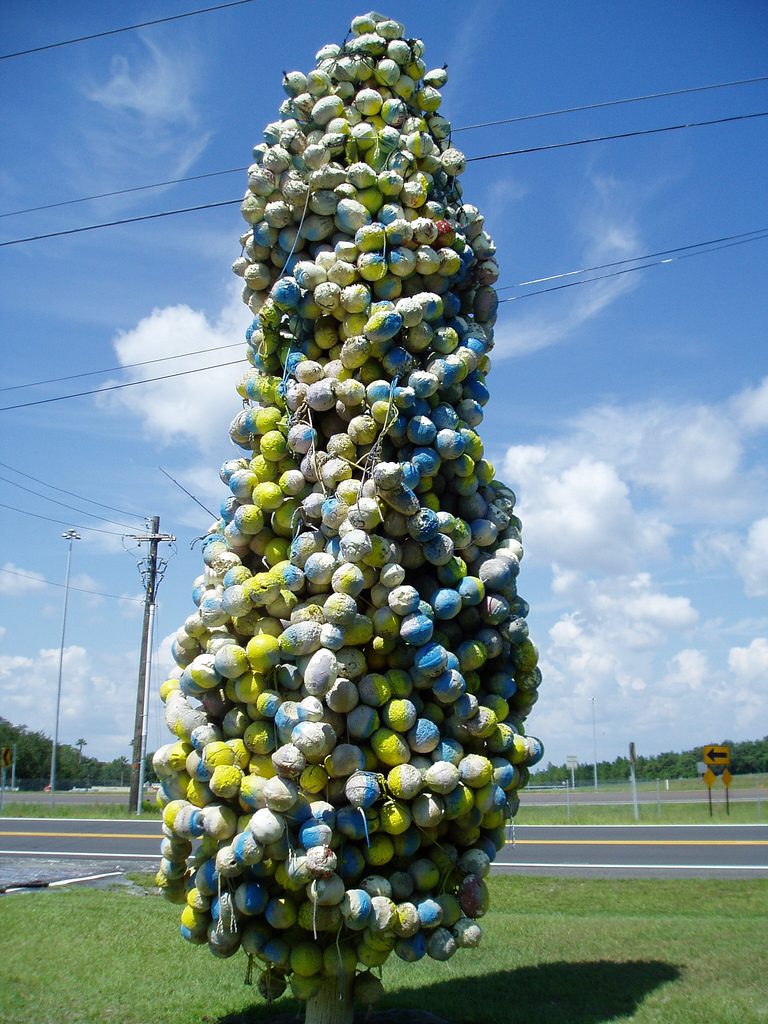
You know you have seen it. Whether you know it as “the Christmas tree” or the “art station,” Hong Kong Willie’s is a spectacular, unique sight.

Seated in the corner of Morris Bridge and I-75, 
 

Hong Kong Willie’s is a gallery where many unique pieces of art are displayed and sold.

Always seeing this place on our way to school, former Editor-in-Chief Pankti Mehta and I had wondered about it for a long time. At the beginning of this summer, we decided to go there and find out.

As we walked into the blue shack, we were greeted by a friendly face. Wearing a blue Hawaiian shirt and khaki shorts, and with his hair pulled back into a ponytail, Joe Brown, or more commonly known as Hong Kong Willie, welcomed us and shared with us the story of his life.

Hong Kong Willie is an artist who finds the meaning in what others would deem as “junk” items. His journey began in his childhood when he collected discarded items from the landfill where he lived and sold them.

“By the time I was eight years old, I was walking around with hundreds of dollars in my pockets,” Brown said.

He had never thought he would enter the realm of art, but his mother knew otherwise. She was the one who made him to go to art school.

“My mother believed that if you were born to do something, you were to do that,” he said.

At art school, he met the person who would inspire his nickname. His art teacher explained the importance and meaning behind insignificant, common items to her students. She had gone to Hiroshima shortly after the atomic bomb had been dropped, and then had left out of Hong Kong. Her inspirational story was the reason Brown nicknamed himself Hong Kong Willie.

When he was in college, the technological industry was booming, with many new innovations coming out in different areas of society. Brown decided to step into it. However, after being in the technological industry for a while, Brown went through a realization:

“I just wasn’t made up for that.”

Knowing that the technological world was filled with greed, Brown decided to step out of it in 1981. He knew that his life’s calling was to be artist, and he was going to be just that.

“We are here to tell a story … to take common items that are not manufactured media that have a meaning.”

He set up his station first in the Florida Keys, but then moved to Tampa, where he has now been living for 37 years.

A firm believer in predestination, Brown explains that he got these beliefs from his father.

“My father understood why he was here. And he made that of great importance to his children… My father gave me the understanding of why we were here
And to be determined to find that.”

In today’s fast-paced society, teaching of such life lessons has become rare. People are more motivated to “get famous and get money,” as Brown put it.

“I’m here just to exemplify and maximize why I’m here. That’s probably the greatest thing that I think is missed in families.”

Hong Kong Willie also explained one of his special pieces to us, which was called Miriosity. Shaped like a bird, Brown used the embedded frailties within the wood to bring out the meaning in the piece.

“Many artists don’t produce more than one great, great, great piece. And Miriosity, she just has all of those elements… Miriosity has a great future.”


Hong Kong Willie has supporters who come into his gallery and buy many of his pieces. With the money that he makes, he gives back a large portion to various social projects. His art is not just a business, and he makes that very clear.

“You can only buy a piece of art if you have fallen in love with it,” he said. He recalled a time when he turned down a buyer from buying some of his works because he knew the reason for buying those works was not genuine.

Hong Kong Willie keeps the presence of art alive in today’s society. Wherever his art goes, a piece of him will forever be with each piece. We are very grateful for his time and his dedication to his work.

Monday

Famous Key West Green Artist . Updated 6/1/2026


 .  Famous Key West Green Artist  . 
 Famous Key West Green  Artist, BELIEVING IN PRESERVATION ART. THE WORLD RECORD BUOY TREE, MADE FROM KEY WEST LOBSTER BUOYS, SHOW THEIR COMMITMENT TO PRESERVATION. LOCATED ON I-75 EXIT 266 IN TAMPA.


 Located off East Fletcher Road between hotel chains and high-end office parks is the gift shop and folk art gallery Hong Kong Willie's.Drive south on I-75, 
look to the right around East Fletcher Avenue, and you can't miss it. The tree appears first, hundreds of buoys wrapped around its branches, resembling a sort of Dr. Seuss-ian Christmas ornament. Then the rest of the 20,000 buoys come into view -- thousands of strands of the multicolored foam balls stretching from the tree to two wooden shacks, hanging from their roofs and walls, and stretched out over the property.

Blue Marlin Dream,$225,000


Artist Born for the Green Movement.
It all started on a landfill in Tamp


.

Hongkongwillie  Famous Key West Green Artist 
raised on Tampa city dump,like living in the Penthouse in the upper east side.


 MYSTERIOSITY   $176,000  Hong Kong Willie Art

Gunn Highway Landfill
The Gunn Highway Landfill is located
off Gunn Highway in Tampa, Hillsborough
County, Florida. The county operated the landfill
 as a trench-type facility for the disposal
of MSW from 1958 to 1962.

John 3:16

King James Version (KJV)


 16For God so loved the world, that he gave his only begotten Son, that whosoever believeth in him should not perish, but have everlasting life.


New Tampa Patch 

By Tristram DeRoma 

The Story Behind the Eye-Catching Art at I-75 Exit 266 Tampa Florida

Famous Key West Green Artist  Joe Brown, better known as "Hong Kong Willie," makes art with a message at his home/studio near

I-75 Exit 266 Tampa Florida

 Black Bird Of Key Largo   $ 98,000. Hongkongwillie Art

Sometimes, it’s the smallest experiences that have the biggest impact on a person’s life.
While attending an art class in 1958 at the age of 8,Famous Key West Green Artist ,Joe Brown recalled being mesmerized by the lesson. It involved transforming a Gerber baby bottle into a piece of art.
“The Gerber bottle had no intrinsic value at all,” he said. “But when (the instructor) got through with me that day, she made me see how something so (valueless) can be valuable.”
By the time class was over, Brown learned many other lessons, too, such as the importance of volunteerism, recycling, reuse and giving back to the community. He recalled being impressed by the teacher's volunteer work in Hiroshima, Japan, helping atomic bomb survivors.
"One of the last words she ever spoke to me about that was, ‘When I left, I left out of Hong Kong,’ ” he said. After turning that over in his young brain for awhile, he decided to use it in a nickname, adding the name “Willie” a year later.
You've probably seen Hong Kong Willie's eye-catching home/gallery/studio at Fletcher Avenue and Interstate 75. But what is the story of the man behind all those buoys and discarded objects turned into art?
Brown practiced his creative skills through his younger years. But as an adult, he managed to amass a small fortune working in the materials management industry. By the the '80s, he left the business world and decided to concentrate on his art. He spent some years in the Florida Keys honing his craft and building his reputation as a folk artist. He also bought some land in Tampa near Morris Bridge Road and Fletcher Avenue where he and his family still call home.
Brown purchased the land just after the entrances and exits to I-75 were built. He said he was once offered more than $1 million for the land by a restaurant. He turned it down, he said, preferring instead to make part of the property into a studio and gallery for the creations he and his family put together.
And all of it is made of what most people would consider “trash.” Pieces of driftwood, burlap bags, doll heads, rope — anything that comes Brown’s way becomes part of his vocabulary of expression, and, in turn, becomes something else, which makes a tour of his property somewhat of a visual adventure. What at first seems like a random menagerie of glass, driftwood and pottery suddenly comes together in one's brain to form something completely different. One moment nothing, the next a powerful statement about 9/11.
One Man's Trash ...
Trash? There is no such thing, Brown seems to say through his art.
He keeps a blog about his art at hongkongwillie.blogspot.com. .
In his shop, he has fashioned many smaller items out of driftwood, burlap bags and other materials into signs, purses, totes, bird feeder hangars and yard sculptures.
He sells a lot to the regular influx of University of South Florida parents and students every year who are are at first intrigued by the “buoy tree” and the odd-looking building they see as they take Exit 266 off I-75.


Of course, many people also stop by to buy the smaller pieces of art that he and his family create: purses made of burlap, welcome signs made of driftwood, planters and other items lining the walls of his store.
He’s also helped put his mark on the decor of local establishments too, such as Gaspar’s Patio, 8448 N. 56th st.
Owner Jimmy Ciaccio said that when it came time to redecorate the restaurant several years ago, there was only one person to call for the assignment, and that was his good friend Brown.
"I’ve known Joe all my life, and we always had a good chemistry together,” Ciaccio said. "He’s very creative and fun to be around, and that’s how it all came about.”
Ciaccio says he still gets compliments all the time for the restaurant’s atmosphere he created using the “trash” supplied by Brown. He describes the style as a day at the beach, like a visit to Old Key West. “They’re so inspired, they want to decorate their own homes this way,” he said.
It’s that kind of testimony that makes Brown feel good, knowing that others, too, are inspired to create instead of throw away when they see his work. He simply lets his work speak for itself.
“Somebody once told me to keep telling the story and they will keep coming," he said, "and they always do."

Friday

Famous Tampa Artist . Updated 5/20/2026

Tampa Famous Artist

BY SOHINI LAHIRI
Growing up in Tampa, I spent a period of time fascinated by a quirky, eye-catching landmark at Fletcher Avenue and Interstate 75. 


This was also the period of time I spent obsessed with making binoculars out of toilet paper rolls and necklaces out of pop tops. To me, this sight was the epitome of similar creative craziness, and I often found myself looking for it during car journeys, hoping it hadn’t disappeared overnight.
But time passes and so does the urge for pop-top necklaces, and observant eyes don’t notice the same sights. It wasn’t until recently that I once again took note of the scene, with its broken down orange helicopter, a tree made of what seems to be indestructible balloons and a blue-and-white house covered with trash remade into art.
It’s the home of Famous  Florida Artist Hong Kong Willie.
I finally paid a visit to this art gallery after many years of wondering about the story behind it. The pavement leading to the door is painted with handprints and splatters, the store edged with upside down Coke bottles. Streams of lobster buoys hang from the roof and also make up the “tree” I marveled at so often from my car window.
Various shoes, bottles, clocks and signs are glued to the side of the store, and there’s a tribute to Sept. 11 off to the side. No one seemed to be home, so I called the number on the “WE’RE OPEN” sign, which brought a middle-aged man in a bright Hawaiian shirt from behind the store.
After a few basic questions, Joe Brown begins to open up about the history surrounding his art.
Brown, better known as Hong Kong Willie, says he was an artist from the start. “Everyone is born an artist,” he said. “However some are granted the gift of being able to express that art.”
As a young boy, his mother decided to send him to art school, which he says changed the course of his life forever.
At the age of 8, Brown recalls being heavily influenced by the lessons, which included transforming a Gerber baby bottle, something with no real value, into a piece of art. His teacher had spent an enormous amount of time and effort in Hiroshima, Japan, helping those affected by the atomic bombs. Brown learned many lessons about recycling from this teacher, who had come from Hong Kong. Brown added an American name, Willie, to Hong Kong for his nickname Hong Kong Willie.
While Brown grew up to be an artist, he left the world of mainstream art to return to his background in technology.
“But on Nov. 13th, 1981 … on a Friday at 1:30 in the afternoon, I had an epiphany,” Brown says. “I was at a friend’s house right across the street,” pausing to point at a row of apartments across from his store, “and a series of events led me to rejoin the art world.”
With the help of two other artists, Brown set up his business in the Florida Keys in the early 1980s, then moved it to Tampa. Together, they believed that they were predestined for the Green Movement, and have been making art out of recyclables for close to 30 years.
How’s business? He smiles. “It’s pretty wild.”
Inside, Hong Kong Willie’s art includes glossy pieces of driftwood restored and painted with beautiful landscapes and kernels of truth, some of the gorgeous work priced in the six figures. But there’s also a wide collection of handmade bags, wooden sculptures and sassy bracelets for more moderate prices.
A portion of the proceeds go to benefit the Green Movement, Brown says.
With a laid-back swagger, Brown continues. “We live pretty minimally. And all the funds we get from donations and our art sales are delegated to green projects.”
I’m not sure what I was expecting when I decided to visit Hong Kong Willie. Certainly not the breathtaking art inside, and definitely not the history behind it. I’m feeling thick-headed for not visiting years ago, and say so.
Brown offers a last bit of insight:
“I’m a big believer in predestination and timing. If someone is not ready to view art, the door is closed. Every piece of art that is made, and every project we do is done for a reason. It doesn’t matter if that reason shows up the next day, or walks in six years later; every piece of art will find a home.”


Tuesday

Famous Tampa Honey Company . Updated 6/1/2026

TAMPA GOLD HONEY IS REAL.
 https://www.localtampahoney.com/

 Local Honey at its Highest Standard.


Tampa Gold Honey consistently receives positive reviews.

 Tampa Gold Honey consistently receives positive reviews, with customers praising its quality, taste, and the friendly service provided by the owners. Many consider it the "best honey in Tampa," highlighting its natural and raw characteristics


 3 GENERATIONS OF PRODUCING HONEY AT ITS FINEST..
 Local Raw Honey for sale in Tampa 
.

Our Tampa Local Honey comes from the Wildernesses.

Wilderness is an area of land that has been largely undisturbed by modern human development. Wilderness areas usually lack roads, buildings, and other artificial structures. This provides a natural environment for Producing Local Honey at its Finest.
Far from Houses,Buildings.
  Local Honey rich with Pollen.
Our Raw Honey,Not Filtered, We do not Heat,.
Nothing but what nectar was Gathered.
You can savor the smell of the blossoms in the Honey .
The concern from sprays used in our neighborhoods are reduced from Bees in Wilderness areas.

 Tampa Gold Wilderness Local Honey is renown for its unique flavor and superb quality. This owes much to the placement of our beehives in the Tampa Wilderness areas. We do this for extended periods, allowing our bees to collect nectar from the blossoms of a diverse range of native plants in one of the most natural, undisturbed wilderness settings . Undeterred, our commitment to excellence led us to explore the varied floral tapestry of wilderness Honey. Tampa Gold Wilderness Local Honey is renown for its unique flavor and superb quality. This owes much to the placement of our beehives in the Tampa Wilderness areas. We do this for extended periods, allowing our bees to collect nectar from the blossoms of a diverse range of native plants in one of the most natural, undisturbed wilderness settings . Undeterred, our commitment to excellence led us to explore the varied floral tapestry of wilderness Honey. 


Why  we stopped putting our Bees in Orange Groves

FARMS' TOXIC COCKTAILS YIELD CROPS, SURPRISES

When pilot Robert Coffey flew across Florida, just above treetop level checking on telephone lines for a phone company in the 1980s, pesticides would drip from the wings of his airplane at the end of the day.

The sticky spray came from flying over citrus groves. Clouds of chemicals rising from the fields covered the aircraft with a fine, toxic mist.

"It was so thick it came off in globs," said Coffey, 72, of Winter Park.

The residue that dripped from Coffey's plane was the proverbial drop in a bucket of chemicals - a huge bucket - that Florida farmers employ every year to ward off insects and disease from their crops.

WE DO NOT SELL ORANGE BLOSSOM HONEY FOR THAT REASON.


Pint Mason Jar Tampa Gold Wilderness  Local Honey is $18.00
Quart Mason Jar
Tampa Gold Wilderness Local Honey is $30.00
1/2 Gallon Mason Jar
Tampa Gold Wilderness Local Honey is $50.00
1 Gallon
Tampa Gold Wilderness Local Honey $85.00

OUR TERMS ARE CASH , NO CARDS


 3 GENERATIONS OF PRODUCING HONEY AT ITS FINEST..
 Local Raw Wilderness  Honey for sale in Tampa

Our Tampa Local
Wilderness  Honey is as it comes from the Bee Hive , which means it retains all of the beneficial nutrients and antioxidants that it naturally contains. Conversely, regular honey may undergo a variety of processing, which may remove beneficial nutrients like pollen and reduce its level of antioxidants.
                                                                    Tampa Gold  Raw Local
Wilderness  Honey is made by bees that have collected nectar from a local source . The taste and composition of Exceptional Raw Honey can vary depending upon the variety of flowers in bloom at the time the honey is made.

WE ONLY SELL RAW Local Tampa
Wilderness  HONEY
 WE NEVER FEED OUR BEES SUGAR WATER, HONEY IS LEFT IN THE HIVE FOR THEM TO SURVIVE.

FEEDING SUGAR  WATER IS NOT A REAL SOURCE, LIKE THE NECTAR THEY BRING IN FROM FLOWERS

NOTHING IS ADDED TO THE HONEY

 Why not state or have our Honey certified ORGANIC.

1 . FIRST OF ALL NO BEE KEEPER IS AWARE OF THE TRAVELS OF EACH BEE.

2 . Any USA Certified Organic honey sold in the United States is imported from other countries and certified organic by that country. ... A US beekeeper can have non-certified organic honey that is raised organically. But it is nearly impossible to produce organic honey.

3. Currently, to be certified organic, honey must meet the general USDA organic standards. But there aren't yet requirements specific to honey. USDA does have recommended guidelines, but an actual organic standard for honey has been in the works since 2001.


ONE SIGN THE HONEY YOU ARE BUYING IS STATED IT IS ORGANIC . IT IS FAKE

Honey is one of the most faked foods in the world, and the US government isn't doing much to fix it.  https://www.businessinsider.com/fake-honey-problems-how-it-works-2020-9


Most Honey in America Is Fake.https://www.wellandgood.com/fake-honey-problem/

Why we do not sell Bee Pollen and Royal Jelly .

Trapping pollen has the potential to inflict significant nutritional stress on the colony Collecting it may adversely affect the health of the bees and even destroy the colony

The truth about Royal Jelly,  well-managed hive during a season of 5–6 months can produce approximately 500 g (18 oz) of royal jelly, also

Collecting it may adversely affect the health of the bees and even destroy the colony.

The manuka honey scandal.

 Manuka honey is often touted as a “superfood,  fact is that is no better than any other REAL HONEY.

 But with more being sold than is actually produced, is there some dodgy dealing going on?


Science or Snake Oil: is manuka honey really a ‘superfood’ for treating colds, allergies and infections? Claims are nonsense.

 According to recent studies and reports, a significant portion of Manuka honey on the market is considered fake, with investigations revealing that nearly half of tested samples may be adulterated with sugars, particularly when not sourced from New Zealand and lacking proper certification, indicating a high rate of fraudulent Manuka honey products.

 REAL Honey HAS BEEN FOUND TO BE NO DIFFERENT FROM MANUKA HONEY


 REAL HONEY used as an anti-inflammatory, antioxidant and antibacterial agent. People commonly use honey orally to treat coughs and topically to treat burns and promote wound healing.


 While honey sticks can be a convenient way to consume honey, some argue they are not "good" because they often contain a larger portion of sugar than traditional honey, can be less environmentally friendly due to the packaging, and might not always guarantee high-quality honey depending on the brand, potentially leading to concerns about purity and taste.


    Packaging waste:
    The individual packaging of honey sticks can contribute to more plastic waste compared to buying honey in a larger container. 
     
    • Quality concerns:
      Some brands might use lower quality honey in their honey sticks, which could impact taste and nutritional value


 Tampa Gold Wilderness Local Honey

12212  Morris Bridge Rd 

Tampa Florida 33637.


I-75 Exit 266 Tampa Florida . Updated 4/2/2026

By Tristram DeRoma 

The Story Behind the Eye-Catching Art at I-75 


Exit 266 Tampa Florida


 Famous  Florida Artist Joe Brown, better known as "Hong Kong Willie," makes art with a message at his home/studio near I 75 Exit 266 Tampa Florida.
Sometimes, it’s the smallest experiences that have the biggest impact on a person’s life.
While attending an art class in 1958 at the age of 8,  Famous Florida Artist,  Joe Brown recalled being mesmerized by the lesson. It involved transforming a Gerber baby bottle into a piece of art.
“The Gerber bottle had no intrinsic value at all,” he said. “But when (the instructor) got through with me that day, she made me see how something so (valueless) can be valuable.”
By the time class was over, Brown learned many other lessons, too, such as the importance of volunteerism, recycling, reuse and giving back to the community. He recalled being impressed by the teacher's volunteer work in Hiroshima, Japan, helping atomic bomb survivors.
"One of the last words she ever spoke to me about that was, ‘When I left, I left out of Hong Kong,’ ” he said. After turning that over in his young brain for awhile, he decided to use it in a nickname, adding the name “Willie” a year later.
You've probably seen Hong Kong Willie's eye-catching home/gallery/studio at Fletcher Avenue and Interstate 75. But what is the story of the man behind all those buoys and discarded objects turned into art?
Brown practiced his creative skills through his younger years. But as an adult, he managed to amass a small fortune working in the materials management industry. By the the '80s, he left the business world and decided to concentrate on his art. He spent some years in the Florida Keys honing his craft and building his reputation as a folk artist. He also bought some land in Tampa near Morris Bridge Road and Fletcher Avenue where he and his family still call home.
Brown purchased the land just after the entrances and exits to I-75 were built. He said he was once offered more than $1 million for the land by a restaurant. He turned it down, he said, preferring instead to make part of the property into a studio and gallery for the creations he and his family put together.
And all of it is made of what most people would consider “trash.” Pieces of driftwood, burlap bags, doll heads, rope — anything that comes Brown’s way becomes part of his vocabulary of expression, and, in turn, becomes something else, which makes a tour of his property somewhat of a visual adventure. What at first seems like a random menagerie of glass, driftwood and pottery suddenly comes together in one's brain to form something completely different. One moment nothing, the next a powerful statement about 9/11.
One Man's Trash ...
Trash? There is no such thing, Brown seems to say through his art.
He keeps a blog about his art at hongkongwillie.blogspot.com. .
In his shop, he has fashioned many smaller items out of driftwood, burlap bags and other materials into signs, purses, totes, bird feeder hangars and yard sculptures.
He sells a lot to the regular influx of University of South Florida parents and students every year who are are at first intrigued by the “buoy tree” and the odd-looking building they see as they take Exit 266 off I-75.
Brown Sells More Than Art
Of course, the real locals know Brown’s place for the quality of his worms.
If there’s one thing that Brown knows does well in the ground, it’s the Florida redworm, something he enthusiastically promotes, selling the indigenous species to customers for use in their compost piles. Some of his customers say his worms are just as good at the end of a fishing hook, though.
“To be honest, what made me come here is that they had scriptures on the top of his bait cans,” said customer John Brin. “Plus, they have good service. They’re nice and they’re kind, and they treat you like family.”
Though Brin knows Brown sells them mostly for composting, he said they are great for catching blue gill, sand perch and other local favorites. He also added that he likes getting his worms from Brown “because his bait stays alive longer than any other baits I’ve used.”
For prices and amounts, he has another blog dedicated just to worms.
Of course, many people also stop by to buy the smaller pieces of art that he and his family create: purses made of burlap, welcome signs made of driftwood, planters and other items lining the walls of his store.
He’s also helped put his mark on the decor of local establishments too, such as Gaspar’s Patio, 8448 N. 56th st.
Owner Jimmy Ciaccio said that when it came time to redecorate the restaurant several years ago, there was only one person to call for the assignment, and that was his good friend Brown.
"I’ve known Joe all my life, and we always had a good chemistry together,” Ciaccio said. "He’s very creative and fun to be around, and that’s how it all came about.”
Ciaccio says he still gets compliments all the time for the restaurant’s atmosphere he created using the “trash” supplied by Brown. He describes the style as a day at the beach, like a visit to Old Key West. “They’re so inspired, they want to decorate their own homes this way,” he said.
It’s that kind of testimony that makes Brown feel good, knowing that others, too, are inspired to create instead of throw away when they see his work. He simply lets his work speak for itself.

To Live a life in the art world and be so blessed to make a social impact. Artists are to give back, talent is to tell a story, to make change. Reuse is a life experience


Blue Marlin Dream of Key West.
$225,000  Hong Kong Willie Art


Do You Want to Buy commercial real estate property for your business.

I75  TAMPA EXIT 266 Location FOR SALE


The future of A I  cost  and control for your Business

 To be at the top of a Google search, it costs between $0 to $100,000 & even more. This depends on a lot of factors like the niche you are in, the size of your organization, your marketing budget, type of marketing used et

 In a matter of weeks, Microsoft and Alphabet-owned Google have shifted their entire corporate strategies in order to seize control of what they believe will become a new infrastructure layer of the economy. Microsoft is investing $10 billion in OpenAI, creator of ChatGPT and Dall-E, and announced plans to integrate generative AI into its Office software and search engine, Bing. Google declared a “code red” corporate emergency in response to the success of ChatGPT and rushed its own search-oriented chatbot, Bard, to market. “A race starts today,” Microsoft CEO Satya Nadella said Feb. 7, throwing down the gauntlet at Google’s door. “We’re going to move, and move fast.”   https://time.com/6255952/ai-impact-chatgpt-microsoft-google/


 HOW MANY TIMES HAVE YOU ASK 

HOW WILL A CUSTOMER OR CLIENT KNOW WHERE MY BUSINESS IS.

Visibility is key in today's marketplace, and this prime location offers the exposure you need to establish credibility and achieve business success. Don't just choose any location, choose the right location for your business.

Why is location,Location ,Location is the Most important factor. Customer Acquisition Cost, Customer TARGETING . Television Advertising, News Paper Advertising, Radio Advertising, Internet Advertising . Has become costly and diluted. PRIME LOCATION FOR EARNINGS FOR A BUSINESS. It's easy to overlook the importance of location in business. However, where you set up your business can have a significant impact on your success; a poor choice can jeopardize your potential income, increase your expenditure and compromise your future growth. Indeed, your positioning influences many factors, from the price point you select for your products or services, to the tone of brand voice you adopt. Your physical location presents your business in a particular light, and, when chosen well, can help you appeal to your precise target market. Your physical location can also have an impact on your business' market positioning, reflecting your brand and its products or services. Often, visibility is a sign of credibility in itself.


When it comes to business success, location matters. But relying on old-school methods like rear-view mirror historical modeling and traditional advertising channels won't cut it in today's marketplace. Learn about the importance of modern tools like advanced AI and internet ads. If you're serious about growing your business and reaching customers in your area, don't miss this informative resource. Get the edge you need - read now.

 Whether you're a realtor, banker, or business owner, understanding the intricacies of location is key to success. But what about the cost of getting customers to come to you?

 Internet Advertising . IF YOU ARE GOING TO DEPEND ON INTERNET ADVERTISING ??  

You don’t know if digital marketing works; but some DO know it didn’t workhttps://www.forbes.com/sites/augustinefou/2021/01/31/billions-spent-on-digital-ads-and-youre-not-sure/?sh=ff583fc50613

Most marketers don’t know if their digital marketing drove business outcomes. But some marketers found out concretely that their digital marketing did not cause sales or business activity, when they paused or turned it off. See: When Big Brands Stopped Spending On Digital Ads, Nothing Happened. When P&G turned off $200 million in digital ad spending, nothing happened to sales. When Chase reduced programmatic ads shown on 400,000 sites to 5,000 sites, nothing happened to business activity. When Uber turned off $120 of $150 million in mobile app ad spending, nothing happened to app installs. When eBay paused all paid search spend in the western U.S., nothing happened to site visits and sales. https://www.forbes.com/sites/augustinefou/2021/01/02/when-big-brands-stopped-spending-on-digital-ads-nothing-happened-why/?sh=44078d9c1166https://www.forbes.com/sites/augustinefou/2021/01/02/when-big-brands-stopped-spending-on-digital-ads-nothing-happened-why/?sh=44078d9c1166


Not all marketers can run “turn off” experiments — where they turn off digital ad spending to see if anything changes. Most don’t have the courage to lead such an experiment; and some hide behind the excuse that “if I turn off spending, but my competitor doesn’t; I might lose market share.” But that logic doesn’t hold up if your digital ads were not working in the first place. Those ads were not what helped you keep market share. To put it more bluntly, if your ads were shown to bots, those ads were not helping you maintain market share. Ad fraud is not the only problem. Other things can be optimized too. 


You don’t know WHERE your ads ran; do you know IF they even ran?

Let’s start with something simple. Where did your ads run — like which sites and which mobile apps carried your ads? How many sites and apps ran your ads (think, the Chase example above)? Most marketers are not getting detailed enough reports to know where their ads ran. Some marketers are not getting any reports at all, just excel spreadsheets that tell them how much they spent. So how would they know where their ads ran, let alone if the ads ran on porn, fake news, hate speech, or disinfo sites? The only thing they are sure about is that they paid for it. And independent research shows that mucho dollars are flowing to fake news sites [1], [2] and funding disinformation [3], like the disinfo that fueled the capitol riots and people refusing to wear masks because they are convinced the virus is not real. By the way, whitelists are suggestions; blacklists are too. That means that even if you use whitelists — a list of domains to include in your programmatic buys — are you sure your ads actually went to those sites? Or if you use exclude lists, are you sure your ads didn’t go to those sites? Many brands thought they blocked Breitbart, but they are still making lots of money from lots of ads.


2.200,000, net after closing to Seller


With thousands of Cars passing everyday .

  I 75 MORNING TRAFFIC   (TRAFFIC BACKED UP ON ENTRANCE RAMP EVERYDAY),Traffic on Interstate BACKED up on overpass at I 75 and FLETCHER SOUTHBOUND . COMMUTERS HAVE A LASTING IMPRESSION EVERYDAY.

THE METHOD OF A call to action (CTA) is a marketing term that refers to the next step or the action that the marketer wants the consumer to take ,IS SO GREAT AT THE TIME A CAR PASSES AND HAS TO WAIT in Traffic.
GREATER THAN than a 15 second TV advertisement.
The potential earnings are greatly expanded for the cost , Location,Location,
A great location for Medical, Dentistry ,Such as

New Teeth Now   ClearChoice Aspen Dental 

Sono Bello 

D5teeth   NewBeauty    Holcomb – Kreithen Plastic Surgery


2.200,000, net after closing to Seller


.CALL 813770 4794

.